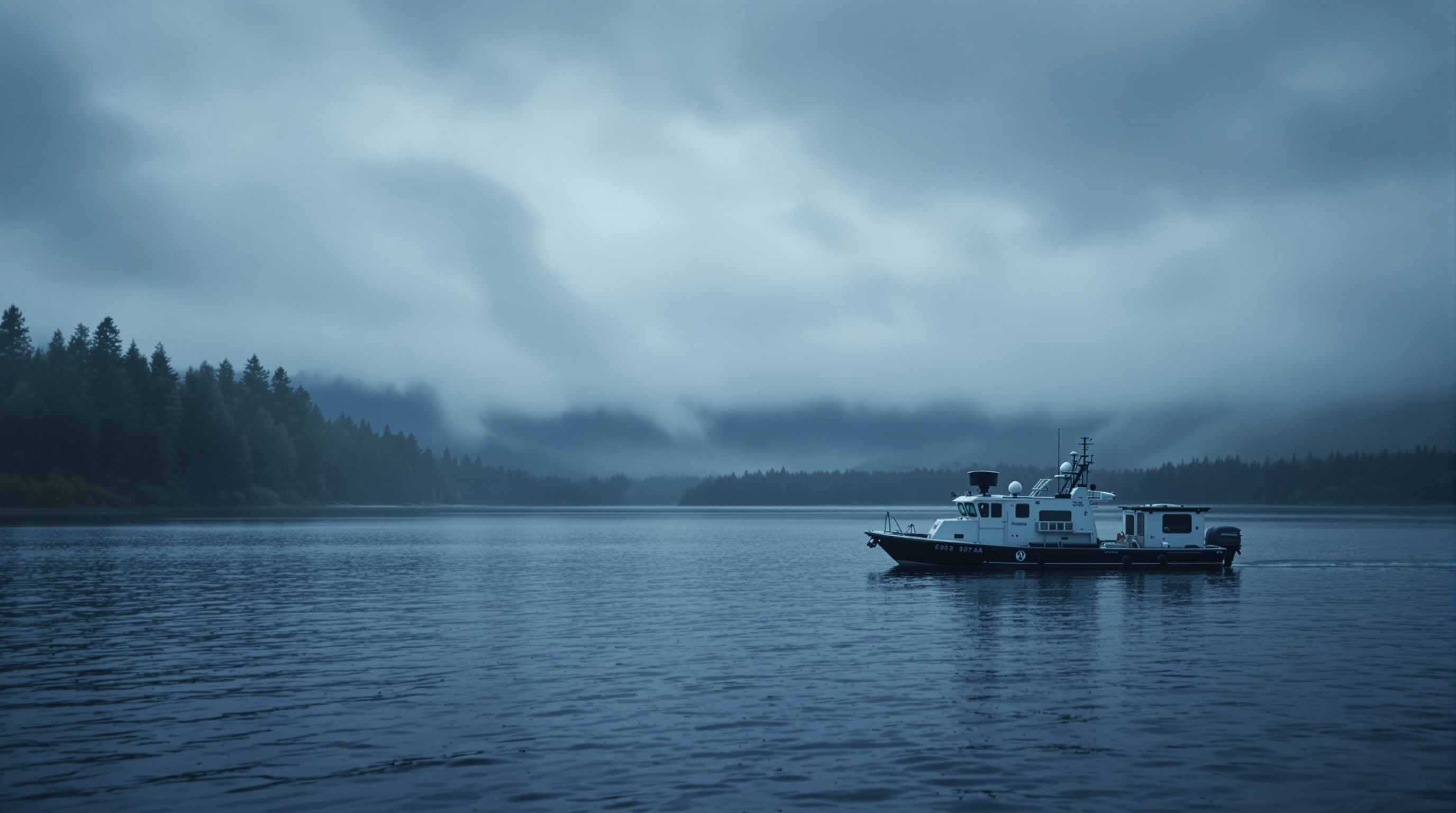
Underwater Search and Recovery: How We Search Rivers, Lakes, and Reservoirs
Water is involved in a staggering number of missing persons cases. Rivers, lakes, reservoirs, drainage canals, retention ponds — these bodies of water are often the last place anyone thinks to search, and they are some of the most challenging environments to investigate.
At SEARCH Investigations, we have conducted underwater search and recovery operations in multiple states. The technology and techniques we use have advanced dramatically in recent years, and they have made it possible to search areas that were previously impenetrable.
When Water Search Is Needed
We consider water search in any case where the missing person's last known location is near a body of water, where the person was known to be near water recreationally or occupationally, where a vehicle may have entered water, where behavioral analysis suggests water (suicidal ideation often correlates with water), or where all land-based searches have been exhausted.
Water is one of the first things I evaluate when I take on a new case. Even if the missing person was not known to be near water, I map every body of water within the probable search area.
ROV Technology
Remote Operated Vehicles have transformed underwater search operations. An ROV is an unmanned submersible equipped with cameras, sonar, and lights that an operator controls from the surface.
Modern search-and-recovery ROVs can operate in deep, murky, and hazardous water where human divers cannot safely work. They transmit real-time video to the surface, allowing investigators to systematically survey the bottom of a river, lake, or reservoir without putting anyone at risk.
ROVs are particularly effective for searching large areas methodically, following grid patterns that ensure complete coverage. They can also navigate strong currents and low-visibility conditions that would be impossible for dive teams.
Sonar Technology
Side-scan sonar and sector-scan sonar allow us to create detailed maps of underwater terrain and identify anomalies that may indicate a person, vehicle, or other object on the bottom.
Sonar works by emitting sound waves and analyzing the echoes that bounce back from objects and the bottom surface. A skilled sonar operator can distinguish between natural features and man-made objects, and can identify shapes consistent with a human body or vehicle even in zero-visibility water.
We often use sonar first to identify targets, then deploy ROVs to visually confirm what the sonar detected. This two-step approach is efficient and thorough.
Cadaver K9s and Water
Here is something that surprises many families: cadaver dogs can detect human remains in water. Decomposition gases rise to the surface, and trained HRD dogs can detect these gases from a boat.
We have deployed cadaver K9 teams on boats across lakes and along riverbanks. When a dog alerts to a specific area, we mark the location and deploy sonar or ROV to investigate below the surface.
This technique is not infallible — currents can carry decomposition gases downstream from the actual location of remains — but it provides an invaluable starting point for underwater search operations.
Current Analysis
In river cases, understanding water current is critical. A person who enters a river at one location may be carried miles downstream before settling. We work with hydrologists and current data to model where a body would likely travel and settle based on entry point, water flow, and physical characteristics of the river.
This analysis prevents us from wasting time searching areas where the person could not be, and focuses our resources on high-probability zones.
Vehicle Recovery
A significant number of missing persons cases involve vehicles that entered water — sometimes accidentally, sometimes intentionally. A submerged vehicle in a murky river or deep lake can be invisible from the surface and may go undetected for years.
Our sonar and ROV capabilities are specifically suited to locating submerged vehicles. Once located, we coordinate with dive teams and towing services for recovery, which often provides critical evidence about the circumstances of the disappearance.
The Emotional Reality
Underwater search and recovery is some of the most difficult work we do — not technically, but emotionally. These are almost always recovery operations rather than rescue. Families know, on some level, what we are looking for. But they need answers. They need to bring their loved one home.
We approach every underwater operation with the seriousness and respect it deserves. The family is going through the worst experience of their lives, and finding their loved one — even in these circumstances — provides the closure they need to begin healing.
If you need underwater search and recovery services, call SEARCH Investigations: (877) 619-9890. We have the technology and the commitment to search where others cannot.